
I use an ego c twist with the kanger t3 clearomizer. The replacement coil units come in 1.5ohms, 1.8, 2.2, and 2.5. What is the difference, when it comes to actual vaping experience, how many ohms the coil unit comes in?
You are using an out of date browser. It may not display this or other websites correctly.
You should upgrade or use an alternative browser.
You should upgrade or use an alternative browser.
Can someone explain OHMS to a newbie?
- Thread starter betterthanyou
- Start date
- th_trl_thread_readers 0
- Status
- Not open for further replies.

OHMS is a measure of electrical resistance.
How I think of it:
The lower the OHMS the more it will heat the juice. Sometimes this is good, sometimes not. Lower OHMS generally give you bigger hits. Sometimes the lower OHMS can burn juices.
This is mostly preference. Try different ones to see what you like, just remember the lower the hotter.
How I think of it:
The lower the OHMS the more it will heat the juice. Sometimes this is good, sometimes not. Lower OHMS generally give you bigger hits. Sometimes the lower OHMS can burn juices.
This is mostly preference. Try different ones to see what you like, just remember the lower the hotter.
Also, lower OHMS can drain the battery faster since the lower the OHMS the more electricity flows.
Lower the OHMS the more electrical flow.
Lower the OHMS the more electrical flow.

I use an ego c twist with the kanger t3 clearomizer. The replacement coil units come in 1.5ohms, 1.8, 2.2, and 2.5. What is the difference, when it comes to actual vaping experience, how many ohms the coil unit comes in?
Any of those three that you pick, start at the lowest setting and work the voltage up slowly with each vape. When you find the spot you like, stay there. If it starts to taste bad, then you went too far. The basic idea (And I know this doesn't make sense right now) is that you want to keep the wattage in between 5 and 8 watts. On a 1.5 ohm coil, that is between 3 and 3.5 volts. On a 2.5 ohm coil, that comes to be between 3.4 to 4.5 volts.
Instead of pretending like I'm going to turn my phone into a calculator for a minute, I use what we used to learn multiplication tables in elementary school. Someone made a nice chart: http://i.imgur.com/6rpDccK.png
Just keep in the green, and you should have adequate results.

Since, it was simplified already, and I'm assuming that you might want the science behind it, and your actual question answer was answered...
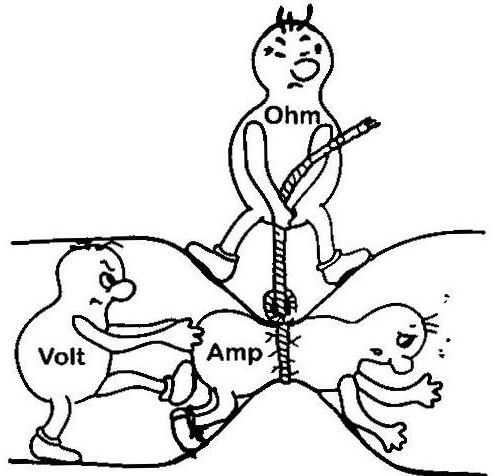
Ohm's is the measurement of resistance. Resistance is the measurement of how a conductor resists current. Current is the measurement of Amps, and the electrons being being pushed by the Voltage. Voltage is the Energy pushing the current up the resistor.
It's not necessary to know this, in my opinion, but if you go in an advanced direction it is. So since you'll know the Resistance of your coil, the Voltage will be a variable controlled by you if , the Current your battery consumption, and the Wattage the measurement of "heat."
Watts=(Voltage x Voltage) ÷ Resistance
Current=Voltage ÷ Resistance
It's not much more complicated than fire+combustible material.
Ohm's is the measurement of resistance. Resistance is the measurement of how a conductor resists current. Current is the measurement of Amps, and the electrons being being pushed by the Voltage. Voltage is the Energy pushing the current up the resistor.
It's not necessary to know this, in my opinion, but if you go in an advanced direction it is. So since you'll know the Resistance of your coil, the Voltage will be a variable controlled by you if , the Current your battery consumption, and the Wattage the measurement of "heat."
Watts=(Voltage x Voltage) ÷ Resistance
Current=Voltage ÷ Resistance
It's not much more complicated than fire+combustible material.
As far as explaining ohms, yes, it measures resistance to electricity. Electrons flow at the speed of light. To over simplify, Imagine a hallway where everyone has to move at the same speed -- if its a wide hallway ( low resistance) then nobody really bumps into each other. But as the hallway narrows, people start bumping into each other-- that's resistance-- then everyone starts pushing and shoving back-- using up energy and generating friction and heat, which we use to vaporize our e-juice.
However, its a mathematical trick. As resistance goes up, there's less electrons flowing through (that's current) to generate heat so it seems counter intuitive but that's why higher resistance generates less heat, not more. For a given voltage, a lower resistance will generate more power in watts. Voltage squared divided by resistance in ohms equals power in watts.
Sent from my microwave oven.
However, its a mathematical trick. As resistance goes up, there's less electrons flowing through (that's current) to generate heat so it seems counter intuitive but that's why higher resistance generates less heat, not more. For a given voltage, a lower resistance will generate more power in watts. Voltage squared divided by resistance in ohms equals power in watts.
Sent from my microwave oven.

As far as explaining ohms, yes, it measures resistance to electricity. Electrons flow at the speed of light. To over simplify, Imagine a hallway where everyone has to move at the same speed -- if its a wide hallway ( low resistance) then nobody really bumps into each other. But as the hallway narrows, people start bumping into each other-- that's resistance-- then everyone starts pushing and shoving back-- using up energy and generating friction and heat, which we use to vaporize our e-juice.
However, its a mathematical trick. As resistance goes up, there's less electrons flowing through (that's current) to generate heat so it seems counter intuitive but that's why higher resistance generates less heat, not more. For a given voltage, a lower resistance will generate more power in watts. Voltage squared divided by resistance in ohms equals power in watts.
Sent from my microwave oven.
Is there any chart for watts with ohms?
Sent from my iPhone using Tapatalk - now Free

Maybe this will help:
Disclaimer: This is the most simplistic explanation and is addressed to new vapers mostly or vapers who are happy within the recommended "just right" power zone (4.5-8.5 watts). If you are using dual coil atomizers or are interested in high wattage vaping, it's a different conversation altogether. You will also have to understand the concept of amp limits and how it applies to high power vaping.
Ohm's Law as it pertains to vaping is really not that complicated--and it's very useful when you want to know what you're doing.
Voltage and wattage are often misunderstood by new vapers. Wattage is the power (heat, sweet spot) that your PV (battery and atomizer) generates. Wattage = Voltage (of your battery) squared divided by Resistance (Ω) of your atomizer [P=V[SUP]2[/SUP]/R]. If you're not good at math, don't worry, use this easy calculator:
Online Conversion - Ohm's Law Calculator
Of course, if you own a VW (variable wattage) device, you don't really need this calculator because your device will do the math for you.
The wattage you want, especially at the beginning of your vaping career, should be somewhere between 4.5 and 8.5 Watts. Anything lower than 4.5 watts may not vaporize your juice properly and will not produce enough warmth and vapor. Anything above 8.5 watts increases the risk of burning the filler in your cartomizers (if you're using them) and even some juices, especially the delicate ones.
There are, of course, other variables, like eliquid and JDD (juice delivery devices) that you're using on your batteries. Seven watts on a filler type cartomizer may feel different than the same 7 watts on a fillerless clearomizer or a dripping atomizer. The same is true for different eliquids; tobaccos, chocolate and coffees generally require more wattage (heat), while fruit and other delicate flavors do better with less heat. Everyone's sweet spot is different--those are just very general guidelines.
Experiment and you'll find your own bliss in no time!
The chart below is a good guide to safe vaping, even though some think it's a bit conservative.

Disclaimer: This is the most simplistic explanation and is addressed to new vapers mostly or vapers who are happy within the recommended "just right" power zone (4.5-8.5 watts). If you are using dual coil atomizers or are interested in high wattage vaping, it's a different conversation altogether.
You will also have to understand the concept of amp limits and how it applies to high power vaping. Ohm's Law as it pertains to vaping is really not that complicated--and it's very useful when you want to know what you're doing.
Voltage and wattage are often misunderstood by new vapers. Wattage is the power (heat, sweet spot) that your PV (battery and atomizer) generates. Wattage = Voltage (of your battery) squared divided by Resistance (Ω) of your atomizer [P=V[SUP]2[/SUP]/R]. If you're not good at math, don't worry, use this easy calculator:
Online Conversion - Ohm's Law Calculator
Of course, if you own a VW (variable wattage) device, you don't really need this calculator because your device will do the math for you.
The wattage you want, especially at the beginning of your vaping career, should be somewhere between 4.5 and 8.5 Watts. Anything lower than 4.5 watts may not vaporize your juice properly and will not produce enough warmth and vapor. Anything above 8.5 watts increases the risk of burning the filler in your cartomizers (if you're using them) and even some juices, especially the delicate ones.
There are, of course, other variables, like eliquid and JDD (juice delivery devices) that you're using on your batteries. Seven watts on a filler type cartomizer may feel different than the same 7 watts on a fillerless clearomizer or a dripping atomizer. The same is true for different eliquids; tobaccos, chocolate and coffees generally require more wattage (heat), while fruit and other delicate flavors do better with less heat. Everyone's sweet spot is different--those are just very general guidelines.
Experiment and you'll find your own bliss in no time!
The chart below is a good guide to safe vaping, even though some think it's a bit conservative.

Resistance is how easy or hard it is for the battery to push current through the wire coil. Ohms is the the unit that resistance is measured in. The symbol for ohms is an upsidedown horseshoe. Current flowing through the wire coil makes the coil heat up. More current flowing the hotter the coil gets
The lower the ohms of a coil the easier it is for the battery to push the current through the coil. The hotter the coil gets the warmer the vapor and more the juice it will vaporize. Original Kanger coils come in 1.5(hot vapor),1.8,2.2, and 2.5 (cool vapor) ohms. If you like the way your juice is tasting just take the coil out and read the number etched around the base. Order the same ohm coil.
The lower the ohms of a coil the easier it is for the battery to push the current through the coil. The hotter the coil gets the warmer the vapor and more the juice it will vaporize. Original Kanger coils come in 1.5(hot vapor),1.8,2.2, and 2.5 (cool vapor) ohms. If you like the way your juice is tasting just take the coil out and read the number etched around the base. Order the same ohm coil.

http://25.media.tumblr.com/tumblr_m9dkanCt0I1qc8949o2_1280.png - Hope this helps. I believe that this is the same chart that Kayta posted. Good luck and have fun!

Here is a somewhat basic tutorial on Ohm's law, although it may overwhelm you at first don't give up. Once you have a basic understanding of how it works it will all fall in line.
Ohm's Law - The basics - Ohms Law Formulas Explained to save you time
I find this tutorial to be a bit easier to understand for beginners.
Here is an ohm's law calculator, with this you can get your measurements without having to do any manual math.
Ohm's Law Calculator
Ohm's Law - The basics - Ohms Law Formulas Explained to save you time
I find this tutorial to be a bit easier to understand for beginners.
Here is an ohm's law calculator, with this you can get your measurements without having to do any manual math.
Ohm's Law Calculator
Last edited:
There is another important effect that is often simplified out. The battery has "internal ohms" too, that are effectively in series with (added to) your atomizer ohms. This shows up as "voltage drop" if you have a multimeter.
This is from 0.1 ohms to 0.5 ohms or more for an 18650 battery, more for cheap ones and less for good ones; less for new ones and more for old ones; less for fully charged and more for half-charged. It's one of the reasons some people think they vape at 10-15 watts, when I suspect very few of them actually do (unless they have an unusual coil setup).
This is from 0.1 ohms to 0.5 ohms or more for an 18650 battery, more for cheap ones and less for good ones; less for new ones and more for old ones; less for fully charged and more for half-charged. It's one of the reasons some people think they vape at 10-15 watts, when I suspect very few of them actually do (unless they have an unusual coil setup).
Also, lower OHMS can drain the battery faster since the lower the OHMS the more electricity flows.
Lower the OHMS the more electrical flow.
Only if you are using a fixed voltage device. If using a VV or VW device, and the Power (Watts) is not changed, battery life is unaffected by resistance.
There is another important effect that is often simplified out. The battery has "internal ohms" too, that are effectively in series with (added to) your atomizer ohms. This shows up as "voltage drop" if you have a multimeter.
This is from 0.1 ohms to 0.5 ohms or more for an 18650 battery, more for cheap ones and less for good ones; less for new ones and more for old ones; less for fully charged and more for half-charged. It's one of the reasons some people think they vape at 10-15 watts, when I suspect very few of them actually do (unless they have an unusual coil setup).
A great IMR/High Drain battery is around 0.02Ω and the worst "wouldnt even use it as a paperweight" batteries as high as 0.21Ω. Internal resistance is not a fixed number though, at low loads the resistance may be much lower than at high loads. It also greatly varies with temperature.
Electrical energy flows very quickly, about 2/3rds the speed of light depending on the conductor. The individual electrons flow very slowly, so slowly you'd struggle to see any movement if you could see them.Electrons flow at the speed of light.
See:
Speed of electricity - Wikipedia, the free encyclopedia


Electrical energy flows very quickly, about 2/3rds the speed of light depending on the conductor. The individual electrons flow very slowly, so slowly you'd struggle to see any movement if you could see them.[\QUOTE]
Electromagnetic energy moves at the speed of light, it just happens to be that in cheap coax, that speed is about 2/3s the speed of light compared to a vacuum. Its relative, as Einstein said. If you ever build a transmitting antenna, and tune it correctly by trimming the lengths to minimize the standing wave ratio, that you'll have to compensate for the speed inside your conducting materials. The antenna is going to be shorter than you'd expect unless you compensate. We havent even begun to touch on reactance, which is similar to resistance. For ecigs, we're generally dealing with direct current or a pulse width modulated square wave that we treat as if it were DC, not radio frequency energy or even plain old AC.
I still disagree about electrons moving slow though. Nothing in your link supports that idea. Following the lack of electrons or hole flow theory makes semiconductor physics easier to understand, but the speeds, while still bound by relativity, are still based on light speed for that conductor. Simulating an electron moving one space at a time using the hole flow theory :
eeee becomes
e eee that moves to
ee ee, then moves to
eee e ending with
eeee
If the hole moved at the speed of light, the electrons displaced have to move at the speed of light. Its just that not all the electrons are moving at the same time, in this example only one is moving at a time. The electrons shift to the left one at a time at light speed in the conductor, while the blank space moves right continuously at the speed of light for that conductor. Its a different thought process, but more accurate.
I could be wrong, I am going off memory. But I did say I was giving a simplified explanation originally.
Sent from my microwave oven.

2.2 ohms at about 4 volts give or take is my sweet spot but that chart is what helped me most, and remember lower volts used is better on battery life. Vape on!
http://25.media.tumblr.com/tumblr_m9dkanCt0I1qc8949o2_1280.png - Hope this helps. I believe that this is the same chart that Kayta posted. Good luck and have fun!
But yours is bigger!
2.2 ohms at about 4 volts give or take is my sweet spot but that chart is what helped me most, and remember lower volts used is better on battery life. Vape on!
^I use a little higher voltage. I typically stay around 9 Watts or about 4.2 Volts. We'll say 4-4.2 Volts with a 2 Ohm coil, so that gives me 2-2.1 Amps. If I use a 1.5 Ohm coil at the lowest voltage setting on my PV, 3.3 Volts, it will give me 2.2 Amps, and more than likely, I want around the same power level, so I will go up closer to 3.6 Volts with a 1.5 Ohm coil, 2.4 Amps. I'll probably not equal out to 9 Watts with a 1.5 Ohm coil with most liquids. I like the extra power, but the temperature I get at 9 Watts with a 2 Ohm coil is as high as I want to go.
So it is really your coil and preference in flavor and temperature that will determine how much you get out of the mAh rating of your battery.
But yours is bigger!
thats what she said.
Edit: sorry couldn't resist.

- Status
- Not open for further replies.
Similar threads

- Replies
- 8
- Views
- 1K


- Replies
- 6
- Views
- 741

- Replies
- 17
- Views
- 7K


- Replies
- 2
- Views
- 1K

Users who are viewing this thread
Total: 2 (members: 0, guests: 2)