Article : Do Stop-Smoking Products Really Work?

Status
Not open for further replies.

Vocalek

CASAA Activist
Supporting Member
ECF Veteran
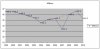
I wonder... I took the line graph that I created using the number of adult smokers for 1999 to 2010 and "normalized" the data for 2007 by drawing a dotted line from 2006 to 2008. Take a look.

Hide-Trend.jpg

Do you suppose that the oversampling in 2007 among subgroups that were showing higher rates of cessation was a ploy to hide an upward trend in smoking that began in 2004?
 

JW50

Super Member
ECF Veteran
Jan 31, 2011
698
80
USA Kentucky
...
In 2010 the message is: "We aren't doing as well as we should be, so let's do more of the same stuff that hasn't worked in the past, and by the way, give us more money!!"

Sounds like good logic to me. Let's giv'um some more. Maybe a stronger campaign against reduced risk products will work!
 

JW50

Super Member
ECF Veteran
Jan 31, 2011
698
80
USA Kentucky
I wonder... I took the line graph that I created using the number of adult smokers for 1999 to 2010 and "normalized" the data for 2007 by drawing a dotted line from 2006 to 2008. Take a look.

View attachment 53363

Do you suppose that the oversampling in 2007 among subgroups that were showing higher rates of cessation was a ploy to hide an upward trend in smoking that began in 2004?

Slope of line (change) from 2009 to 2010 seems out of line with any past trends. Makes 2010 number questionable IMO. What date was first strong negative statements from FDA relating to e-cigs?

If the goal is for fewer Americans to be counted as smokers, campaigns against alternatives to smoking seem counter productive. My logic would suggest that promoting such alternatives, particularly ones that seem to work and offer substantially reduced health risks (even if not perfect), would provide greater societal benefit than a position of damning anything that has any appearance of "smoking". And, of course, the numbers being shown (percentages of population that smokes or how many smoke) do not necessarily translate into increased life or reduced health care costs. A sampling of perhaps a segment of the population that continues to smoke, a sampling of a segment of the population that has chosen alternatives and a sampling of a segment of the population that has never smoked - then comparing mortality, morbidity and health care costs of each of the segments might provide real insight into what provides the best course of action.
 

Vocalek

CASAA Activist
Supporting Member
ECF Veteran
Slope of line (change) from 2009 to 2010 seems out of line with any past trends. Makes 2010 number questionable IMO. What date was first strong negative statements from FDA relating to e-cigs?

If the goal is for fewer Americans to be counted as smokers, campaigns against alternatives to smoking seem counter productive. My logic would suggest that promoting such alternatives, particularly ones that seem to work and offer substantially reduced health risks (even if not perfect), would provide greater societal benefit than a position of damning anything that has any appearance of "smoking". And, of course, the numbers being shown (percentages of population that smokes or how many smoke) do not necessarily translate into increased life or reduced health care costs. A sampling of perhaps a segment of the population that continues to smoke, a sampling of a segment of the population that has chosen alternatives and a sampling of a segment of the population that has never smoked - then comparing mortality, morbidity and health care costs of each of the segments might provide real insight into what provides the best course of action.

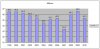
A line graph may be a little misleading. The point does not mark the start of the year. The point marks the end of the year. So all of the decline from 46.6 to 45.3 occurred during the year 2010. It might be a little clearer looked at as a bar graph.

10-M-Bar.jpg

So the question isn't what was going on to discourage people from using e-cigarettes. The question is what was going on to encourage people to use them. E-cigarettes were not well known in 2008 or even in 2009. They became more well known when the FDA held a press conference to denegrate the products in July 2009. That was about the time that most e-cigarette consumers became aware of the law suit that Smoking Everywhere had filed against the FDA, asking for an injunction against the FDA seizing product imports. Sottera, Inc. (dba njoy) joined the suit.

By January 2010, we had Judge Leon's ruling. He granted the injunction. So perhaps some folks who were thinking about getting into the business but holding off decided to go ahead. The final disposition of the case was still up in the air throughout 2010, due to the FDA filing appeals, but nevertheless, sales continued to grow, and the number of smokers making the switch grew as well, which would, of course, make the smoking prevalance go down.
 

JW50

Super Member
ECF Veteran
Jan 31, 2011
698
80
USA Kentucky
I think my comment about the slope is correct. It is still a slope that is greater than evidenced in prior years except for the dubious 2006 to 2007 period. Am not saying the 45.3 million number shown for 2010 is wrong - just that it may deserve closer scrutiny and thought as to accurateness. But maybe of no consequence anyway as your comments seem to suggest that FDA is doing the right things to effectively reduce the number of smokers. FDA denigrates e-cigs in mid-2009, number of smokers down by end of 2010. Kind of doubt that was the plan but seems to have been the result.

But, having been a long term smoker and knowing that what FDA (or the Surgeon General) might say about smoking was not going to change that practice, a reduced risk substitute had merit to it in my opinion. That alternative, for me, resulted in the giving up of the smoking. It may be that my eventual practice will be to give up e-cigs as well. But even if the e-cigs continue, e-cigs have provided a meaningful step toward eventual abstinence. I tend to believe it will be easier to part with the e-cigs than to part with the smokes. Would it have been the case that had there been no e-cigs that other methods would have been found to stop the smoking. Hard to say. Gum and patches have been around for a considerable period of time now and they did not entice me to stop. To me it seems reasonable and logical that e-cigs (and smokeless tobacco as well) be viewed as aides toward the reduction of smoking prevalence. But if it takes the FDA to denigrate them to cause the population to consider them - I'm for more denigration.
 

rothenbj

Vaping Master
Supporting Member
ECF Veteran
Verified Member
Jul 23, 2009
8,294
7,720
Green Lane, Pa
.......
My head is spinning along with the verbiage. I guess it all depends on what political agenda you want to promote............

It all depends on whether they're looking for a pat on the back or substantial increases in funding. You build your study on reduced smoking prevalence to show the great success you've had and increase the numbers to plead for the millions for your programs. Do you really think they truly have a clue on smoking prevalence, especially as more and more smokers take the "shady" route.
 

rothenbj

Vaping Master
Supporting Member
ECF Veteran
Verified Member
Jul 23, 2009
8,294
7,720
Green Lane, Pa
....... A sampling of perhaps a segment of the population that continues to smoke, a sampling of a segment of the population that has chosen alternatives and a sampling of a segment of the population that has never smoked - then comparing mortality, morbidity and health care costs of each of the segments might provide real insight into what provides the best course of action.

It's best for them to stay away from such comparisons and just state "smoking costs society". Once you look at overall cost, long living, non-smokers get expensive in terms of both health care costs and retirement benefits. There was a study that placed the order, as I recall, non-smokers, obese, then smokers. Once you are no longer a part on the GNP from the supply side, your only value to the system rests on the demand side. Most retired people are having a hard enough time paying for the essentials let alone making an impact purchasing goods and services.
 

Vocalek

CASAA Activist
Supporting Member
ECF Veteran
I think my comment about the slope is correct. It is still a slope that is greater than evidenced in prior years except for the dubious 2006 to 2007 period. Am not saying the 45.3 million number shown for 2010 is wrong - just that it may deserve closer scrutiny and thought as to accurateness. But maybe of no consequence anyway as your comments seem to suggest that FDA is doing the right things to effectively reduce the number of smokers. FDA denigrates e-cigs in mid-2009, number of smokers down by end of 2010. Kind of doubt that was the plan but seems to have been the result.

But, having been a long term smoker and knowing that what FDA (or the Surgeon General) might say about smoking was not going to change that practice, a reduced risk substitute had merit to it in my opinion. That alternative, for me, resulted in the giving up of the smoking. It may be that my eventual practice will be to give up e-cigs as well. But even if the e-cigs continue, e-cigs have provided a meaningful step toward eventual abstinence. I tend to believe it will be easier to part with the e-cigs than to part with the smokes. Would it have been the case that had there been no e-cigs that other methods would have been found to stop the smoking. Hard to say. Gum and patches have been around for a considerable period of time now and they did not entice me to stop. To me it seems reasonable and logical that e-cigs (and smokeless tobacco as well) be viewed as aides toward the reduction of smoking prevalence. But if it takes the FDA to denigrate them to cause the population to consider them - I'm for more denigration.

I'm going to take another stab at explaining this, since you understood me to say the opposite of what I was trying to convey.

No, I was not trying to say that the FDA trying to ban e-cigarettes made them popular.

Their press conference brought to the attention of people who already used e-cigarettes that the FDA was, in effect, stealing from vendors by seizing incoming shipments that were already paid for. People who had not heard of e-cigarettes prior to July 2009 were mostly frightened by the FDA's misleading press release. Local press coverage got some "man on the street" reaction with smokers saying such things as, "Man, I was going to give those things a try. But they got antifreeze! They'll give you cancer! I'm going to stick with my (much safer) Marlboros."

The sales of e-cigarettes picked up at the start of 2010, once it became more likely that the FDA was NOT going to be able to pull off banning the products, thanks to Judge Leon's ruling. As far as a slope goes, it went up from the end of 2004 to the end of 2009. At the start of 2010 it headed downward. We won't know whether this is an anomoly (like 2007) or a trend until there is another point to plot. If the prevalence rate continues to decline for another year or two, we will know that we have turned a corner.

And with more voices joining ours every day, it is going to become harder and harder for the antis to try to say, "there's no evidence they work" and "they could be more dangerous than smoking (regular cigarettes).

There is evidence they work. Perhaps that evidence doesn't add up to "proof" as yet, but proof is made up of more than once piece of evidence. In a court of law, for a civil case it is decided by a "Preponderance of the evidence". In a criminal trial, you need "Proof beyond a reasonable doubt."

The antis have nothing but manufacturered evidence as proof they are harmful. "We found antifreeze in them." So? Unless you drink 6,800 cartridges of e-liquid in a single day, you can't be poisoned by the trace quantity found. "We found carcinogens." So? A user would need to vape a thousand or so cartridges to match the amount of the same chemical taken in by a day's worth of smoking.

Frankly, I was way too far gone to be better off waiting for "proof beyond a reasonable doubt" or even a "preponderance of the evidence." I was already wheezing, just laying abed at night. The whistling noise was keeping me awake. I was already coughing up a gob of yellow cloudy phlegm every morning. I did not have 10 years or more to wait for absolute proof. The evidence was good enough for me. My health got better, not worse.

And after dozens of failed attempts, I was finally a "former smoker." Good enough for me
 
Last edited:

JW50

Super Member
ECF Veteran
Jan 31, 2011
698
80
USA Kentucky
Well - sorry about the misinterpretation. But - I think - my view is not much different than yours. That is, e-cigs are a valuable and beneficial alternative toward reduction of smoking. Of course, the extremes of the antis would have told you, given the health issues mentioned, you should have just quit smoking. Before you tell me that that is simpler said than done, note that I'm not saying that. That is what the extremes of the antis might say.

46.5 million in 1999 and 46.6 million in 2009 would certainly suggest that little progress has been made toward reduced smoking. It makes it even more puzzling why the extremes of the antis are seemly so unyielding in their positions toward e-cigs and smokeless tobacco.
 

rothenbj

Vaping Master
Supporting Member
ECF Veteran
Verified Member
Jul 23, 2009
8,294
7,720
Green Lane, Pa
Well - sorry about the misinterpretation. But - I think - my view is not much different than yours. That is, e-cigs are a valuable and beneficial alternative toward reduction of smoking. Of course, the extremes of the antis would have told you, given the health issues mentioned, you should have just quit smoking. Before you tell me that that is simpler said than done, note that I'm not saying that. That is what the extremes of the antis might say.

46.5 million in 1999 and 46.6 million in 2009 would certainly suggest that little progress has been made toward reduced smoking. It makes it even more puzzling why the extremes of the antis are seemly so unyielding in their positions toward e-cigs and smokeless tobacco.

Because they're not only NOT sold by BP, but also cut into BP profits where a good portion of the ANTZ revenue stream originates.
 

Valsacar

Ultra Member
Supporting Member
ECF Veteran
Verified Member
Aug 16, 2010
1,778
243
Seoul
Part of the problem is that the authors of such articles find the first person with an MD or PhD behind their name and, if that person has an opinion, s/he qualifies as an expert. Unfortunately, the concept of tobacco harm reduction is not well accepted in the medical community, so the authors will have a tough time tracking down an expert who knows what they are talking about.

There were so many factual errors in that article that I had to leave four comments to deal with the most egregious of them. And then there was the troll who hangs out online for the sake of belittling others. I guess it makes him feel important. I hope that guy has to drive home next to someone who is so deeply in the throes of nicotine withdrawal that he or she can't see straight. I find it ironic that when I am abstinent from nicotine, I have about the same operational capacity as someone who is quite drunk.

According to your troll over there CASAA sells ecigs and that's why you posted defending them... apparently ECF sells them too, I need my share of the profits!
 

Vocalek

CASAA Activist
Supporting Member
ECF Veteran
According to your troll over there CASAA sells ecigs and that's why you posted defending them... apparently ECF sells them too, I need my share of the profits!

Let me know as soon as you find the e-cigs that must be extremely well hidden on the CASAA "Store" page: <- Sarcasm alert!

ProductCart shopping cart software - CASAA

We don't even run advertisements for vendors.

It would appear that yon troll hath not even visitied our humble site. :confused:
 
Last edited:

APD99

Super Member
ECF Veteran
Verified Member
  • Mar 11, 2011
    305
    576
    Bristol, PA
    Moreover, no-one appears to be counting the human cost of keeping people addicted; a condition that destroys self-esteem, controls addicts lives, and inflicts unnecessary crippling financial burdens on the addict’s family.
    This was in the comments from your troll and all I can say is W.T.F. Is this guy serious or is he just looking for attention. I can see this being true if you're dealing with a ...... addict, but a smoker? This guy is out of control.
     

    Baldr

    Ultra Member
    ECF Veteran
    Verified Member
    Jul 14, 2011
    1,391
    1,671
    Dallas, Tx
    Smoking does have an incredibly high financial burden. Mostly because the non smokers have raised tobacco taxes so high. Funny how they punish smokers by applying all those taxes, and then claim that the financial burden is part of the problem with smoking.

    It does control smokers lives to a certain degree - mostly because the anti-smoking zealots have made it impossible to smoke almost anywhere. When I was young, I could smoke on an airplane, in a movie theater, at the ball game, at work. Now some people aren't allowed to smoke inside their own homes, and the zealots want smokers standing out in the rain and the cold and the sun.

    It is an addiction, no doubt. I'm addicted. Even with my eGo, I'm still smoking a half pack a day or so. A major improvement - but I'm still smoking.

    But I'm well aware that more of the downside to smoking isn't direct, is indirect, because the anti smoking zealots want to treat smokers like crap, and they apparently have the political pull to do it.
     

    JW50

    Super Member
    ECF Veteran
    Jan 31, 2011
    698
    80
    USA Kentucky
    According to your troll over there CASAA sells ecigs and that's why you posted defending them... apparently ECF sells them too, I need my share of the profits!

    I am still puzzled by the above comment. Seems out of context with the quote that it referenced. Wondering if there is culture/communication issue at play. Even if CASAA were selling ecigs, which I don't believe for an instant, why would this person have a claim to a "share of the profits". Just makes no sense at all. Perhaps a follow up is called for to explain to the confused like me what is meant.
     

    Vocalek

    CASAA Activist
    Supporting Member
    ECF Veteran
    No, I understood that he was reporting on what the troll was saying over there (because I had been reading and feeding the toll). So I figured out that Valsacar was kidding around about wanting his share of the (imaginary) profits. Sometimes the printed word is not as good at conveying the whole story as the spoken word and face-to-face communication.

    Tone of voice or facial expression (e.g. a wink) often gets across the idea that someone is kidding in cases where just reading it in print doesn't convey irony or sarcasm unless you know all the players and their backgrounds. I have started trying to add written cues such as "<- sarcasm alert" to make up for the lack of hearing the person speak and/or watching their face and body language.
     

    Vocalek

    CASAA Activist
    Supporting Member
    ECF Veteran
    This was in the comments from your troll and all I can say is W.T.F. Is this guy serious or is he just looking for attention. I can see this being true if you're dealing with a ...... addict, but a smoker? This guy is out of control.

    *Sigh* Yes, our (un)friendly neighborhood troll has fallen into the generalization trap. The Attorney General announced in 1988 that nicotine is "as addictive as <those drugs we can't name on ECF>" What he meant was that in talking with recovering addicts he learned that those addicts found it as difficult or more difficult to give up smoking than it was to give up their illicit drug.

    But there is more to the definition of "addiction" than simply having difficulty giving up a practice. And maybe the reason it's more difficult to give up nicotine is because of its beneficial effects. In my case, when I gave up nicotine I became as impaired as someone actively using <those drugs>.

    Many members of the general public, and perhaps even many health care providers, mistakenly began to believe that there were exact parallels between addiction to <those drugs> and nicotine. However, they fail to take into account that nicotine is not intoxicating, that nicotine does not impair the user's judgement and memory, and that therefore using nicotine does not have the same impact on the user's life as using <those drugs>.

    For example, people who regularly get high on alcohol or <those drugs> often start to miss work or to show up at work but perform poorly because they can't concentrate and can't remember what they should. They also sometimes become violent and injure themselves or others. Ironically, you only see these things happening with nicotine withdrawal, not with nicotine use.

    The "crippling financial burdens" sounds like something straight out of the addiction literature. A daily habit of <those drugs> can run hundreds or thousands of dollars a day. But all of the profits from <those drugs> are going to the world of crime, whereas tobacco users are paying higher prices due to the government looking to make a buck off the weakest and poorest group in society. Troll might be referring to the high costs of health care for smoking-related diseases, but again falls into the generalization trap by believing that the health consequences of smoke-free alternatives are the same as the health consequences from smoking.

    There is no "crippling financial burden" to the use of smoke-free alternatives, unless the government changes all that by taxing them as much or more than cigarettes.
     
    Status
    Not open for further replies.

    Users who are viewing this thread