Status
Not open for further replies.

DVap

Nicotiana Alchemia
ECF Veteran
Verified Member
Aug 26, 2009
1,548
1,586
Really ? I thought the alkaloids were, among organic comounds, distinguished by their alkali property (basic nitrogens) and so should be more or less the only things to pass through the alkali-acid cycle ... No ?

I take the alkaloids from organic to water to organic to water to organic and then isolate.

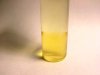
40 mg/mL looks like the following:
basic.jpg

If you get something with alkaloids at 40 mg/mL, and it looks like this, you're looking good.

A similar approach could be applied to kitchen WTA. Rinse the oil a couple times with basic water, extract to acidic water, rinse the acidic water a couple times with oil, add basic water and extract to oil, add acidic water and extract to water. Would be very much cleaned up.
 
Last edited:
The last time I travelled to China I planned to do something alittle similar at the Forbidden City and such, just a 30ft helium ballon would get you above the crowds, but didnt get around to it.

Ideally one would have monitor and remote shutter control, More ideally still a way to guide the camera direction.

Mostly took videos this time, bt some pics are here: Panoramic photographs of Beijing, China (Over 1,000 panorama photos)

Was reading earlier that it is now tallied 10 billion Earth-like planets in the milky way (just our own galaxy). Science is amaxing ...

Must be a fair few places already mastered diy WTA

Just imagine ... an inter-galacyic web ...
Of course, they'd have to learn engrish first ;)
 
Last edited:
I take the alkaloids from organic to water to organic to water to organic and then isolate.

40 mg/mL looks like the following:

View attachment 30482

If you get something with alkaloids at 40 mg/mL, and it looks like this, you're looking good.

A similar approach could be applied to kitchen WTA. Rinse the oil a couple times with basic water, extract to acidic water, rinse the acidic water a couple times with oil, add basic water and extract to oil, add acidic water and extract to water. Would be very much cleaned up.

Thanks, a pic is worth a 1000 words ...

Indeed, such washes would be a good idea to follow for the more savvy experimenter.

If that were just nicotine in freebase form it would be almost clear. So the color is due to oxidation, or the minor alkaloids (some are golden colored, such as anatabine)

Too sleepy, gotta go to dreamland, express rail ...
 
Last edited:

tescela

Super Member
ECF Veteran
Apr 28, 2009
536
5
since snus does have proven efficacy and a long safety record, something should be said about snus being generally a known safe WTA source, and might be tried to see if it does the trick... with this sort of procedure being more appropriate to those who just need the whole hand/mouth/vapor experience... and snus just didn't do it well enough.

So more a means of last resort to save oneself from going back to smoking.

Notwithstanding the point you are trying to make about safety, we should note that there are plenty of people who would rather take a few drags off a WTA eliquid-loaded PV every hour or so, as opposed to having an ever-present snus pouch in their mouth.
 

tescela

Super Member
ECF Veteran
Apr 28, 2009
536
5
Done carefully, this 'kitchen' method might well get within a 10% margin of the lab method - both in terms of yield and purity.

Nit-pick away ... this is the chance to get it best as can be.

Maybe we ultimately go for two versions - one detailed, nuanced and a bit technical, and the other a 1,2,3

Actually, three methods, right (including the simple snus soak)?
 
Summary of Experimental Simple WTA Method (after tceight; with invaluable help from DVap and ideas and feedback from many others, including slopes).

Makes 25ml of ~16mg/ml WTA.

I needed :

* 40g tobacco ('medium pouch' / 40 superking cigarettes), or snus or snuff.

* Light mineral oil (pure, pharma grade)

* Distilled water (or de-ionised water)

* Pure citric acid powder (normally comes in 50g or 100g tubs)

* Pharma grade calcium hydroxide or calcium carbonate. Crush to a fine powder.

* Sodium bicarbonate ('baking soda' or 'bicarbonate of soda') (not 'baking powder'). A 100g tub will be sufficient.
I heated the bicarbonate in an oven at 250C for 1/2 hour to convert it to sodium carbonate. Creating my carbonate this way ensured that the carbonate is food grade.
Create a sulution of this in 20ml of distilled water, until no more will dissolve after vigorous stirring.

Step 1: I added the carbonate solution to the tabacco until all the tobacco was wet, but without having excess (free-running) liquid. Then added a similar amount of mineral oil. Also added some carbonate powder (about 1 tablespoon).

Mixed and gently mashed this mix for about 20 minutes or so. Then leave for a further hour.

wta_2.png

1. Why is extra sodium carbonate powder added, because it is too much to put in the water solution or just on a whim to make the mix more basic?

2. Couldn't one just agitate the tobacco with the alkaline water then later combine with the oil and shake the mixture?

3. It says you make 20ml of sodium carbonate solution, but then add some amount to wet all of the tobacco and an unspecified, similar amount of oil. Are you finding that you need about 20ml to accomplish this?

4. If the answer to #2 is 'Yes', would I want to double the amount of sodium carbonate solution in order to make up for no oil being added at that point?

5. I'm trying to make sense of this huge thread and don't get why olive oil was used at some point. Is there some advantage to certain types of oils over others? I saw it mentioned that hydrocarbons could be an impurity from using mineral oil, but I don't know if the same would be true for others like olive oil. Hydrocarbons seem like a pretty broad range of chemicals, many of which I don't want in a PV. The only plant oil I choose for cooking is coconut oil, so I was curious if anyone had any opinions on using that too.

6. What is the molecular structure of whatever mineral/paraffin oil people are using? I'm having trouble finding out exactly what that is. It seems to me like this is because it is actually some sort of blend, like PEG-400, but I am not familiar with this type of notation.

Since this is a kitchen extraction, I'd like to make a ~$20 suggestion that might keep people from tearing their hair out, and sputtering atties.

Labfunnels.jpg

Don't we need some sort of clamps and metal rods that go into special lab tables for this? My brother (chem student) suggested this though as an alternative to the icing bags. I was playing with the idea of getting into distilling some of my own flavorings, so maybe I should look at getting one of these tables. Isn't there some sort of alternative stand that I can use with a normal table though? I don't have a lot of ideas where is good to shop for this stuff, so would appreciate more suggestions before I go searching.

Notwithstanding the point you are trying to make about safety, we should note that there are plenty of people who would rather take a few drags off a WTA eliquid-loaded PV every hour or so, as opposed to having an ever-present snus pouch in their mouth.

I haven't tried snus yet and am not really interested in it, though maybe it is just some stigma against "chew", which I know it doesn't behave like. This is what I want though, some satiation instead of chain vaping.

I know this info is somewhere in the thread but... Given I make some fairly pure kitchen WTA, what sort of amount of that do I add per ml for either someone not attuned to WTA or a snus user/analog smoker? I will be using bottles that are supposed to be fairly accurate for water at room temp to be 40ul drops or 25/ml.
 
1. Why is extra sodium carbonate powder added, because it is too much to put in the water solution or just on a whim to make the mix more basic?

2. Couldn't one just agitate the tobacco with the alkaline water then later combine with the oil and shake the mixture?

3. It says you make 20ml of sodium carbonate solution, but then add some amount to wet all of the tobacco and an unspecified, similar amount of oil. Are you finding that you need about 20ml to accomplish this?

4. If the answer to #2 is 'Yes', would I want to double the amount of sodium carbonate solution in order to make up for no oil being added at that point?

5. I'm trying to make sense of this huge thread and don't get why olive oil was used at some point. Is there some advantage to certain types of oils over others? I saw it mentioned that hydrocarbons could be an impurity from using mineral oil, but I don't know if the same would be true for others like olive oil. Hydrocarbons seem like a pretty broad range of chemicals, many of which I don't want in a PV. The only plant oil I choose for cooking is coconut oil, so I was curious if anyone had any opinions on using that too.

6. What is the molecular structure of whatever mineral/paraffin oil people are using? I'm having trouble finding out exactly what that is. It seems to me like this is because it is actually some sort of blend, like PEG-400, but I am not familiar with this type of notation.

1. The extra carbonate powder is to compensate for wtaer content of the tobacco. But as saturated carbonate is pH 11 and only pH 9 is required, this can perhaps be omitted.

2. This might be just as good.

3. The 20ml of carbonate solution is just a guestimate. One must play it by eye; all tobaccos are a bit different.

4. Probably yes, otherwise you won't be able to squeeze out sufficient liquid.

5. It was thought as a group that mineral oil would be better as it is more homogenous, while plant oils although mostly fatty acids, contains a few other ingredients. However, if prefer to use a vegetable oil it should work reasonably well. There should be very little mineral left in the final product as it is highly water phobic and is used in theater smoke machines; but if choose veg oils, there might be some additions to the end product. I don't know that any possibilities in this regard would be bad in temselves or when heated, but it's something to bear in mind.

6. Parafins, n-alkanes. See Mineral oil - Wikipedia, the free encyclopedia
Light mineral oil is the one to go for.
 
Last edited:
I haven't tried snus yet and am not really interested in it, though maybe it is just some stigma against "chew", which I know it doesn't behave like. This is what I want though, some satiation instead of chain vaping.

I know this info is somewhere in the thread but... Given I make some fairly pure kitchen WTA, what sort of amount of that do I add per ml for either someone not attuned to WTA or a snus user/analog smoker? I will be using bottles that are supposed to be fairly accurate for water at room temp to be 40ul drops or 25/ml.

If not a smoker / snus user, you might need little WTA. Try 10% WTA 90% e-liquid and work up in ratio till it's right for you. Maybe try 1ml batch by creating it with a ratio of drops.
 

DVap

Nicotiana Alchemia
ECF Veteran
Verified Member
Aug 26, 2009
1,548
1,586
Notwithstanding the point you are trying to make about safety, we should note that there are plenty of people who would rather take a few drags off a WTA eliquid-loaded PV every hour or so, as opposed to having an ever-present snus pouch in their mouth.

Yep, which is why I did acknowledge that snus doesn't do it in a preferential sense for some people... and thus the traditional hand/mouth/vapor preference... but certainly worth a try to see if it does the trick.. some folks who thought snus was gross now swear by it.
 

DVap

Nicotiana Alchemia
ECF Veteran
Verified Member
Aug 26, 2009
1,548
1,586
Since this is a kitchen extraction, I'd like to make a ~$20 suggestion that might keep people from tearing their hair out, and sputtering atties.

Labfunnels.jpg

Very effective in extractions, however, if anything volatile is being used (or gas evolved such as CO2), the user must fully understand how and when to correctly vent these things and possibly, more importantly, when to agitate with the stopper not installed, or something bad is bound to happen. Explosion is generally a more minor hazard (but with major consequences...so these things get tossed in the trash very quickly if obvious small fractures are noted.. the most dangerous probably being what is known as a "star crack") but the more present danger is getting a pressurized release through the stopcock of something you'd rather not have on your skin or, worse, in an eye. So, if someone is going to give this a shot, be aware that the sealed nature of this apparatus adds a several-fold increase to the hazard. I've seen professionals screw-up with these things.
 
Last edited:

DVap

Nicotiana Alchemia
ECF Veteran
Verified Member
Aug 26, 2009
1,548
1,586
With the number of tobacco extractions and alkaloid purifications I've done using multiple tobacco brands and also snus, the color has been very consistent throughout. My strong inclination is to believe that the color represents the state of the alkaloids in the tobacco, and represents some oxidation from curing and age... but probably, as you suggest, much of the color is just due to the some of the alkaloids themselves being colored.
 

DVap

Nicotiana Alchemia
ECF Veteran
Verified Member
Aug 26, 2009
1,548
1,586
The heavier laxative oil is probably OK (it's actually what I used to test the effectiveness of oil), though the viscosity does make it harder to work with and thus not preferred. As for stabilizers, I'd want to see nothing more than vitamin-E.

I believe, though I can't say with 100% certainty, that baby oil is a light mineral oil. Trouble is, unlike the heavier laxative oils, these aren't really intended for internal use, and good luck finding one without "fragrance" as an ingredient.

Get Googling. :)
 
The heavier laxative oil is probably OK (it's actually what I used to test the effectiveness of oil), though the viscosity does make it harder to work with and thus not preferred. As for stabilizers, I'd want to see nothing more than vitamin-E.

I believe, though I can't say with 100% certainty, that baby oil is a light mineral oil. Trouble is, unlike the heavier laxative oils, these aren't really intended for internal use, and good luck finding one without "fragrance" as an ingredient.

Get Googling. :)

Try a compounding pharmacy. It is much easier to work with.
 
Ca(OH)2 is insoluble in itself, but I could possibly see enough low solubility interaction occurring to provide neutralization. Or CaCO3 instead? Perhaps akin to the reaction of limestone with acid.

One could simply make up a solution of citric acid in water, figure out the millimoles present, and figure out the equivalent amount of Ca(OH)2 or CaCO3.. then add an excess of solid Ca(OH)2 or CaCO3, shake it up, wait a bit, then filter or decant and check the pH of the clarified solution. Worth a look if someone wants to take it on.

In the test, though not when making actual product, one could put a drop of pH indicator into the citric acid solution; such as red cabbage or beetroot juice (fresh, not pickled). After shaking with the calcium carbonate or hydroxide, color should change from red to purple/bluish. And the solution taste plain.
 
Last edited:

TropicalBob

Vaping Master
ECF Veteran
Jan 13, 2008
5,623
65
Port Charlotte, FL USA
Damn glad to see you guys are still at it. Dvap, I surely thought of you when I tested Star Scientific's CigRX product. It can't hold a candle to the WTA liquid you made and I tested with two others. I'll check back every few months to see how things are going (yep, I still e-smoke daily, and keep a snus or Stonewall in my mouth; just passed by third year of daily e-smoking {Jan. 3} and am coming up on four years off cigarettes.
 

deusXmchna

Senior Member
ECF Veteran
Apr 11, 2010
238
3
TX
Very effective in extractions, however, if anything volatile is being used (or gas evolved such as CO2), the user must fully understand how and when to correctly vent these things and possibly, more importantly, when to agitate with the stopper not installed, or something bad is bound to happen. Explosion is generally a more minor hazard (but with major consequences...<snip>.

:oops:
Sorry. ASSumed that if someone was going to go through the trouble of securing one, they'd either remember how to use it from HS/college, or they'd educate themselves on how to use it properly....but you're right, when I ASSume, it (and DVap) makes an ... out of Me :blush:


*apologies*apologies*apologies*
 

kardenm

Senior Member
ECF Veteran
Nov 14, 2010
113
0
pittsburgh pa
The heavier laxative oil is probably OK (it's actually what I used to test the effectiveness of oil), though the viscosity does make it harder to work with and thus not preferred. As for stabilizers, I'd want to see nothing more than vitamin-E.

I believe, though I can't say with 100% certainty, that baby oil is a light mineral oil. Trouble is, unlike the heavier laxative oils, these aren't really intended for internal use, and good luck finding one without "fragrance" as an ingredient.

Get Googling. :)

Thanks for the input DVap! Stabilizer in the mineral oil I found is "tocopherols" which I gather is vitamine E. I did find some packaged specifically for enemas (lol) which is "100%" (no stabilizers) but it is more expensive. May search for some unscented baby oil.

Still having trouble finding citric acid or even pure ascorbic acid.

Of course all these things are available online so I may have to break down and order some.

Here are some interesting sites for chemical supplies (chemicals and equip.).

Common Sources of Chemicals Listed by The Society for Amateur Scientists

The Citizen Scientist

Readily Available Chemicals

Elemental Scientific, LLC
 
Status
Not open for further replies.

Users who are viewing this thread