Are "fancy" wire builds worth it with Mesh?

Status
Not open for further replies.

TheOnyxEgg

Senior Member
ECF Veteran
Jun 13, 2014
137
59
Minneapolis, MN, USA
I've been using and rebuilding my DID and RSST for about 6 months now and wanted to see if others felt that there was a noticeable difference in using twisted, braided, ribbon etc wire when recoiling with a mesh wick. I can certainly see how the different surface characteristics could make a big difference with "soft" wicks like cotton or rayon, but what about the relatively smooth surface of a mesh tube?

I mainly use them on mechs (if that makes a difference here).

Obviously this is a bit of a "to each their own" question. I will likely end up trying some of the options above anyway just for kicks regardless of the feedback from here as I enjoy building coils, but wanted to hear other's experiences with using "fancy" wire with mesh.

Thanks in advance!
 

twgbonehead

Vaping Master
ECF Veteran
Apr 28, 2011
3,705
7,020
MA, USA
Well, I've struggled a lot on my genny builds (mostly because I keep getting shorts to the SS!) but I think the answer is no. (This may just be the way I build them, which in general is badly!) So, the rest of this is IMHO:

The SS mesh acts not just as a wick, but also kind of as a coil; it gets heated by the coil and a lot of the vape comes directly from the hot mesh. So you get that extra "coil surface area" from the hot mesh.

Unlike something like a cotton wick (which absorbs heat from the coil very poorly) the SS mesh spreads the heat from the coil, and gives a large "hot" area, so the actual coil texture becomes much less important (as long as it's a geometry that can transfer heat to the mesh effectively).
 

CrazyCory564

Senior Member
ECF Veteran
Dec 31, 2014
263
167
Well, I've struggled a lot on my genny builds (mostly because I keep getting shorts to the SS!) but I think the answer is no. (This may just be the way I build them, which in general is badly!) So, the rest of this is IMHO:

The SS mesh acts not just as a wick, but also kind of as a coil; it gets heated by the coil and a lot of the vape comes directly from the hot mesh. So you get that extra "coil surface area" from the hot mesh.

Unlike something like a cotton wick (which absorbs heat from the coil very poorly) the SS mesh spreads the heat from the coil, and gives a large "hot" area, so the actual coil texture becomes much less important (as long as it's a geometry that can transfer heat to the mesh effectively).

Are you putting juice on your mesh and torching it 4-5 times until it gets real black before you install it? That will oxidize it and stop it from causing shorts
 

TheOnyxEgg

Senior Member
ECF Veteran
Jun 13, 2014
137
59
Minneapolis, MN, USA
You shouldn't have to get the mesh super torched and blackened to get rid of shorts, although that certainly is effective.

Typically I use what I've seen called the pulse method (part of the Petar K method?). Basically I mount the atty on a mech with a partially discharged battery (usually around 3.7v) after I've got the coil and the untorched mesh in place then tap the switch for just a quick burst of power. You can see the spots where the coil is shorting on the mesh as they flash real bright. Keep pulsing the power on and off (I usually use 1 second bursts to start and then as things start behaving better move to longer pulses) and eventually the spots where it's shorting will get oxidized by the coil. You may have to prod it a bit with a mini screwdriver or something if you get a hot spot, but this method has worked very consistently for me.

I like doing it this way as I feel like the mesh stays much cleaner, and doesn't require me to torch the heck out of the mesh.

This does tend to work much better with heavier gauge wire though (28 is much easier than 32), as it's more durable and less apt to pop while pulsing. You need to be pretty careful with the thinner wire especially at first when pulsing.
 

CrazyCory564

Senior Member
ECF Veteran
Dec 31, 2014
263
167
You shouldn't have to get the mesh super torched and blackened to get rid of shorts, although that certainly is effective.

Typically I use what I've seen called the pulse method (part of the Petar K method?). Basically I mount the atty on a mech with a partially discharged battery (usually around 3.7v) after I've got the coil and the untorched mesh in place then tap the switch for just a quick burst of power. You can see the spots where the coil is shorting on the mesh as they flash real bright. Keep pulsing the power on and off (I usually use 1 second bursts to start and then as things start behaving better move to longer pulses) and eventually the spots where it's shorting will get oxidized by the coil. You may have to prod it a bit with a mini screwdriver or something if you get a hot spot, but this method has worked very consistently for me.

I like doing it this way as I feel like the mesh stays much cleaner, and doesn't require me to torch the heck out of the mesh.

This does tend to work much better with heavier gauge wire though (28 is much easier than 32), as it's more durable and less apt to pop while pulsing. You need to be pretty careful with the thinner wire especially at first when pulsing.

You don't have to; It's just a more efficient but longer way of doing things. Personally, I would just coat it in a little juice, use the torch to light the juice, wait til it burns itself out, and repeat 4 ish times until it is black. Then there is absolutely no chance of shorting from the wire. Plus oxidized metal seems to simply perform better imo from what ive seen.

You can pulse it, but it isn't any cleaner; that black stuff is oxidation, not dirt, and the flame burns anything else off. And you don't have to torch the .... out of it; just a second or two will make the juice ignite. You will usually remove any hotspots by doing this as well.

P,S, this is after you've rolled it up to the shape you want, It also helps it hold this form
 

Chelonian

Super Member
ECF Veteran
Apr 9, 2014
976
707
Upper East TN
Quenching - soakin in juice then burning it - is unneeded.
The pulse method is great, but I find a combo is best.

I build the wick, then dismount it from the atty, with the coil wrapped around the wick that I have slid into it.

I torch just the area that the coil touches, remount the wick/coil, then pulse.

This has been the most reliable for me - with almost no juice darkening.


Redacted
 

rolygate

Vaping Master
Supporting Member
ECF Veteran
Verified Member
Sep 24, 2009
8,354
12,406
ECF Towers
OK so there are a bunch of methods. :) It's whatever works for you, after all.

I've got some old gennys like a DID or two, could never get enough flavour out of them back then, am going to try the new wick stuff in them now. Either rayon or Japanese cotton straight up, or inside the SS tube.

Oh yeah and with kanthal as well. Only ever used nichrome on them before.
 

Chelonian

Super Member
ECF Veteran
Apr 9, 2014
976
707
Upper East TN
The DID is my absolute, favorite, all day, day in, day out, use as a beater at work vape.

Love it :)

I always use Kanthal, 28 gauge 4.5 wraps around a 3/32 mandrel put into the wick hole to wrap them, and then insert the mesh.

Wrapping the mesh right is the hardest part. If the wick doesnt saturate within 15 or less second from contact with juice, take them out, wrap them again.

There are many ways to use Gennys, but of the vapers I know, I am the only one who likes gennys as the go to vape.

Makes me sad :(
Redacted
 
Last edited:

snow blind

Super Member
ECF Veteran
Verified Member
Mar 12, 2012
910
916
PA
I love japanese cotton on my geni. If you do, try cutting it on a diagonal so it's fat at one end, thin on the other. Pull it through the coil until the fat end doesn't want to go anymore, an voila; no need to tilt ever. But a lot of people just use a rectangular piece of cotton; whatever works for you man

Blasphemer! :ohmy:

But seriously... it can be halfway decent on certain gennies! "Old-school" non reduced chamber attys like a Kraken or RSST can make a good situation out of some organic cotton. The Lon takes cotton with a micro (no fill plug) surprisingly well for such a small chamber... same with the BF99. (well that was designed to also use it) The Sat22 on the other hand... forget about it. SS all day.
 

WattWick

Vaping Master
ECF Veteran
Feb 16, 2013
3,593
5,429
Cold Norway
I've messed around a little with microcoils and ribbon wire etc. Not a lot, but enough to have formed an opinion. If left alone long enough to forget which is which, it doesn't make all that much of a difference.

I don't think mesh benefit as much from crazy coils as other materials. Only reason I sometimes use compressed coils is because they're sometimes easier to work with on I.e curved wicks.
 
I've been running genny's almost exclusively for about a year, and i almost always get those phantom hot spots, especially with ribbon and 26g.. to the point where i just turn the wattage down and deal with it or make it a micro coil.. if left untreated, it will burn through and basically CUT your wick though
 

Chelonian

Super Member
ECF Veteran
Apr 9, 2014
976
707
Upper East TN
Thanks for all of the discussion!

To circle back to the original question, it sounds like most would say that there is little to no benefit from using twisted wire, ribbon wire, etc.

Time to get back to practicing my building!

Personally, I have found that no matter the type of atty, the wick is way more important than the coil.

In a genny, when I roll a wick, it had better be saturated from top to bottom within 15 or so seconds of being put into the tank.

If it isn't, I take it out and roll it again.


Redacted
 

Thrasher

ECF Guru
ECF Veteran
Verified Member
Oct 28, 2012
11,176
13,742
Madeira beach, Fla
Well like anything else the general thought is more or thicker wire will provide more surface area touching the wick making more vapor as a result.

I have used ribbon wire and the result was more vapor but no more flavor really, so I think exotic builds within the geni is more work then is needed. As you can't build past the performance of the overall design. You may be able to tweak it or bring out its best potential but you can't make it much better thn the way it is built to work.

Unlike say a dripper where the more extreme you get the more extreme they respond.

To me the challenge was in learning to maximize the performance of the setup, to figure out things like how much mesh works best in this atty, what resistance range with what wire gives me the response time and flavor I desire etc.


(And stop oxidizing your wicks and making everything taste like crap while killing the wicking ability)
 
Last edited:

vapolator

Full Member
Apr 17, 2012
46
44
France
A good first step is rolling the mesh in the right direction.

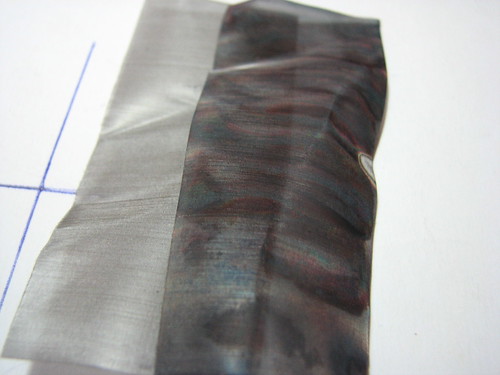
As you see in this picture, the mesh have a direction like clothes :
14689383621_49816277cf.jpg


And you have to roll it to place the "main ropes" vertically :
14689377401_240b7bb281.jpg


Overoxydizing is good to start more in ease but that's not a way at term for the flavor and the juice integrity in the tank. To burn it is more destructive than anything, see an used mesh :
8942276867_d2dc0118aa.jpg


Burning liquid on it is like to transform it to an old state before using it. And it sabotage its wicking qualities in blocking the holes with heavy dirt. By the way our liquids are made to vaporize them, not to burn them. Not sure than it's sane too, particulary with high glycerin ratio.
 

WattWick

Vaping Master
ECF Veteran
Feb 16, 2013
3,593
5,429
Cold Norway
Personally I dont think its ever "worth it" unless you just enjoy spending the extra time and tinkering alot more. I built alot when I firs started vaping. Mainly just out of fun. I rarely noticed better taste or anything like that. Just a lot of trouble in my opinion

Not really to argue... your post sparked a thought. This is more about mesh itself than fancy build on mesh.

I am currently in a phase where I don't feel like tinkering with gear. Setting up atties feels more like a 'must' than a 'want'. Thus I am very happy I know how to work with the most durable wicking material that requires the least maintenance.

I imagine my total time spent setting up and maintaining my gear is magnitudes lower than your average fiber wick user. May have taken me longer to learn - but that's about two years ago now. For me I'd say it was 'worth it' because I spend less time tinkering. All I want is to pick up a setup and vape. With efficient vaporization and low flavoring content it takes a looong time for my coils to gunk up.
 
Last edited:

Thrasher

ECF Guru
ECF Veteran
Verified Member
Oct 28, 2012
11,176
13,742
Madeira beach, Fla
Anymore I twist the mesh, wrap the coil on it, (Great call mentioning the grain) zap out the hotspots and done. Im through half a tank before most are done oxidizing or squeezing coils or playing with their fancy coil tools and all that nonsense lol

Aint gonna lie though took a bit of experience to get to that point, and that is all I think fancy or exotic builds are good for... hands on time and experience..
 
Last edited:
Status
Not open for further replies.

Users who are viewing this thread