ANTZ seizes upon "Electronic Cigarette Use Among Teenagers and Young Adults in Poland"

Status
Not open for further replies.

AndriaD

Reviewer / Blogger
ECF Veteran
Verified Member
Jan 24, 2014
21,253
50,807
64
LawrencevilleGA
angryvaper.crypticsites.com
@AndriaD - Unfortunately there's no law against malicious stupidity or junk science. In fact I have to fight similar issues at work every day. Unelected apparatchiks parasitising the public dollar at various regulatory agencies routinely abuse their power and spew all sorts of nonsense disguised as "science" in support of their prejudiced crusade for pet projects.

I begin to understand more and more my ancestors' drive to escape the Old World; I wish there was anyplace left to go, I really do, to get away from fools and evil fanatics obsessed by their own narrow-minded certainties. If space travel had progressed to the point that "pioneers" could go "out there," I'd go in a second. Anyplace has got to be better than this world.

Andria
 

Kent C

ECF Guru
ECF Veteran
Verified Member
Jun 12, 2009
26,547
60,051
NW Ohio US

Great piece by Carl! Amazing how someone using their figures and logic can see the outnesses they can't see themselves (or blind themselves to them). :facepalm: And this is true of almost every ANTZ study we've seen!

Liked this:

"Also, it will probably surprise no one that they did not report the rate of former smoking among e-cigarette users, to avoid demonstrating that inconvenient fact."
 

Zebra Puzzle

Full Member
Oct 21, 2014
19
14
Poland
We have 23.9% in 2010–2011 to 38.0% in 2013–2014 cigarette use. Let's look at this


First study: link ----------------------------------

Method:
Students who had smoked >100 cigarettes in their lifetimes and who had smoked at least once in the past 30 days were considered to be current smokers

Current smokers number is nowhere to be found. Is it 23,9% mentioned in later study?

Past 30 days smokers is 37,1%


Second study: link ----------------------------------

Method:
Students were asked both whether they had ever and currently (in the past 30 days) smoked tobacco cigarettes or puffed on e-cigarettes (even a single puff)

This paragraph I don't understand
We tested differences in the prevalence of e-cigarette use, tobacco cigarette smoking, and simultaneous use of both tobacco and e-cigarettes (“dual use”) using a multilevel linear mixed model regression with the dichotomized survey time as the independent variable and age (continuous), sex (categorical), and area of living (categorical: urban vs. rural) as covariates. The analysis adjusted for the clustering caused by the sampling structure.

Current tobacco cigarette use is ofc 38.0%

Past 30 days smokers label is nowhere to be found.


So this is somehow shady to me. I am not sure if methods from both studies are the same. But maybe I didn't read cerefully or i miss something (not native English speaker)
From perspective of average Polish Joe these numbers are unbelivable. Smokes went up 30% in price in that period, e-cigarettes down. It's hard to sustain smoking even from minimal salary. Much less high school kid allowance. And they have to buy all these computer games, smartphones, cool clothes, and from time to time knock themselves down with booze. Well, maybe that is some kind of Veblen effect.
 
Last edited:

Zebra Puzzle

Full Member
Oct 21, 2014
19
14
Poland
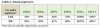
Ok, different angle. Look at this table, another region, same age, very weak and small study.

table.jpg

Cigarette consumption doubled in 2 years! But what cigarette do they have in mind? There is no mention of e-cigarette in this report. Ha! Teenagers are confused and report vaping as smoking.
Of course Goniewicz differentiate those two because he is not some provincial teacher. Yet, the same confusion can happen. People are not instructed in detail about questions. They can make mistake no matter if e-cig or cig questions are first.
 

Painter_

Super Member
ECF Veteran
Verified Member
Dec 21, 2013
615
1,669
In my happy place
I like to consider myself a reasonably erudite individual, but I've read this half a dozen times and I still don't have the slightest idea what it means.


Does this help?

Multilevel Grouped Regression for Analyzing Self-reported Health in Relation to Environmental Factors: the Model and its Application - Groothuis-Oudshoorn - 2006 - Biometrical Journal - Wiley Online Library


Abstract

A method for modeling the relationship of polychotomous health ratings with predictors such as area characteristics, the distance to a source of environmental contamination, or exposure to environmental pollutants is presented. The model combines elements of grouped regression and multilevel analysis. The statistical model describes the entire response distribution as a function of the predictors so that any measure that summarizes this distribution can be calculated from the model. With the model, polychotomous health ratings can be used, and there is no need for a priori dichotomizing such variables which would lead to loss of information. It is described how, according to the model, various measures describing the response distribution are related to the exposure, and the confidence and tolerance intervals for these relationships are presented. Specific attention is given to the incorporation of random factors in the model. The application that here serves as an example, concerns annoyance from transportation noise. Exposure – response relationships obtained with the described method of modeling are presented for aircraft, road traffic, and railway noise. (© 2006 WILEY-VCH Verlag GmbH & Co. KGaA, Weinheim)
 

DrMA

Ultra Member
ECF Veteran
Jan 26, 2013
2,989
9,887
Seattle area
A lot of big words designed to obscure a relatively simplistic and straightforward statistical hypothesis testing framework. Here's a decent description of the basic underlying method: https://en.wikipedia.org/wiki/Multilevel_model. In short, this is a generalization of linear regression (the one you can do in Excel) that allows for having more than one slope. The ridiculous expression "dichotomized survey time" means the two surveys (2010/1 and 2013/4) were simply treated as a discrete and dimensionless grouping variable (think group A vs. group B) rather than two time points three years apart.
 
Last edited:

Nate760

Ultra Member
ECF Veteran
Mar 11, 2014
1,301
4,541
San Marcos, CA, USA
The ridiculous expression "dichotomized survey time" means the two surveys (2010/1 and 2013/4) were simply treated as a discrete and dimensionless grouping variable (think group A vs. group B) rather than two time points three years apart.

It was "dichotomized" that made me chuckle in the first place, because a dichotomy means you have two choices that are mutually exclusive. That obviously is not what's being described.
 

skoony

Vaping Master
ECF Veteran
Jul 31, 2013
5,692
9,953
70
saint paul,mn,usa
Does this help?

Multilevel Grouped Regression for Analyzing Self-reported Health in Relation to Environmental Factors: the Model and its Application - Groothuis-Oudshoorn - 2006 - Biometrical Journal - Wiley Online Library


Abstract

A method for modeling the relationship of polychotomous health ratings with predictors such as area characteristics, the distance to a source of environmental contamination, or exposure to environmental pollutants is presented. The model combines elements of grouped regression and multilevel analysis. The statistical model describes the entire response distribution as a function of the predictors so that any measure that summarizes this distribution can be calculated from the model. With the model, polychotomous health ratings can be used, and there is no need for a priori dichotomizing such variables which would lead to loss of information. It is described how, according to the model, various measures describing the response distribution are related to the exposure, and the confidence and tolerance intervals for these relationships are presented. Specific attention is given to the incorporation of random factors in the model. The application that here serves as an example, concerns annoyance from transportation noise. Exposure – response relationships obtained with the described method of modeling are presented for aircraft, road traffic, and railway noise. (© 2006 WILEY-VCH Verlag GmbH & Co. KGaA, Weinheim)

oh,i see.
:confused:
mike
 

Bill Godshall

Executive Director<br/> Smokefree Pennsylvania
ECF Veteran
Apr 2, 2009
5,171
13,288
68
Thanks to Zebra Puzzle for posting the link to Goniewicz' 2010/11 survey/study, which raises even more questions about Goniewicz' new claims, as well as his junk science research methods.

But Zebra Puzzle inaccurately wrote:
Current smokers number is nowhere to be found. Is it 23.9% mentioned in later study?

In fact, Goniewicz 2010/11 survey reported that 37.1% of students interviewed were cigarettes smokers
.
Among surveyed Polish youths, e-cigarettes were the fourth most common source of nicotine after tobacco cigarettes (37.1%; 95% CI: 36.2–37.9), waterpipes (22.2%; 95% CI: 21.5–23.0), and snuff (16.9%; 95% CI: 16.2–17.5) (Fig 1).
Electronic Cigarette Use Among Teenagers and Young Adults in Poland

But Goniewicz et al 2013/14 survey/study stated that the cigarette smoking rate in the 2010/11 survey was 23.9% (not 37.1%).
Interestingly, the prevalence of smoking tobacco cigarettes also increased (from 23.9% in 2010–2011 to 38.0% in 2013–2014; p < .05).
http://www.jahonline.org/article/S1054-139X(14)00310-3/fulltext

While the 2010/11 survey included high schools and colleges from all of the different regions of Poland,
a total of 144 schools (96 in urban and 48 in rural regions) and 32 universities (16 in urban and 16 in rural regions) were selected.
the 2013/14 survey included just high schools in just 2 regions of the country, and as previously stated, included 12 different high schools in the different surveys (all of which heavily biased the 2012/13 survey, which invalidated its comparison to the 2010/11 nationwide survey findings).

The study was performed in the two regions of Poland using a three-staged stratified cluster sample as described previously [6]. To compare e-cigarette use between the two samples, we pooled the data for the same regions and participants' age ranges from a larger cross-sectional study conducted nationally in 2010–2011 and compared it with data from 2013 to 2014. The same methods were used to collect the 2013–2014 sample as for the 2010–2011 sample, with the restriction of sampling to two regions of Poland (as opposed to several) and high schools but not universities. The 2010–2011 sample used for comparison included 1,760 students (89% response rate) from 17 schools (94% response rate). The 2013–2014 sample included 1,970 students (89% response rate) from 21 schools (84% response rate). Thirteen schools participated in both studies.

Please note that the 37.1% cigarette smoking rate found in 2010/11 was for high school students (15-19) and college students (20-24) combined (and the study didn't report the smoking rate for just high school students).

The smoking rate among Polish high school students (in the 2010/11 survey) almost certainly was higher than the 37.1% reported for high school and college students combined because 8.2% of high school students (compared to just 5.9% of college students) reported using an e-cig in the past month, 23.5% of high school students (compared to just 19% of college students) reported ever using an e-cigs, and because high school and college smokers combined were 7-9 times more likely than nonsmokers to report ever and past month use of an e-cig.
Electronic Cigarette Use Among Teenagers and Young Adults in Poland

So why did Goniewicz choose to survey (in 2013/14) high schools in just 2 regions of Poland that had significantly lower (and very likely the lowest) high school smoking rates in 2010/11 (23.9%) than the national average (which was >37.1% for high school and college students combined)?

And once again, why did Goniewicz choose to eliminate 4 schools in those 2 regions (that were surveyed in 2010/11) from the 2013/14 survey, and why did Goniewicz choose to add 8 new schools to the 2013/14 survey (that weren't in the 2010/11 survey)?

And why didn't Goniewicz explain (or even report) any of these many important facts?

And why didn't the peer reviewers or journal editors identify and attempt to resolve any of these problems?
 
Last edited:

AndriaD

Reviewer / Blogger
ECF Veteran
Verified Member
Jan 24, 2014
21,253
50,807
64
LawrencevilleGA
angryvaper.crypticsites.com
And why didn't Goniewicz explain (or even report) any of these many important facts?

And why didn't the peer reviewers or journal editors identify and attempt to resolve any of these problems?

A cop would probably say "follow the money," and look at the bank accts of those individuals... alas, regular folks can't do that. But there's some payola going on somewhere...

Andria
 

Bill Godshall

Executive Director<br/> Smokefree Pennsylvania
ECF Veteran
Apr 2, 2009
5,171
13,288
68
There were several errors in my posting at:
http://www.e-cigarette-forum.com/fo...agers-young-adults-poland-2.html#post14433822

The following statements in that posting were incorrect
- cigarette smokers were times 28 times more likely than never smokers (57.4% vs 2%) to report “past month” use of an e-cig,
- just 2% of never smokers reporting “past month” e-cig use, and
- no survey has found >2% of never smokers reporting “past month” e-cig use

Upon recalculation of 2013/14 survey data reported by Goniewicz and Dutra/Glantz (from high schools in 2 regions of Poland):
- cigarette smokers were 9.3 times more likely than never smokers (57.3% vs 6.15%) to report "past month" use of an e-cig, and
- former smokers were 3.4 times more likely than never smokers (21.0% vs 6.15%) to report "past month use of an e-cig.

Among the 589 teens who reported "past month" use of an e-cig in 2013/14:
- 72.8% (n=429) were "current smokers"
- 20.3% (n=120) were "former smokers"
- 6.8% (n=40) were "never smokers"

Among the 1,970 teens who participated in the 2013/14 survey:
- 38.0% (n=749) were "current smokers"
- 29% (n=@571) were "former smokers"
- 33% (n=@650) were "never smokers"

Thus, "past month" e-cig use in 2013/14 was reported by:
- 57.3% of "current smokers"(429/749=.573),
- 21% of "former smokers" (120/571=.21)
- 6.15% of "never smokers" (40/650=.0615)


Therefore:
- "Current smokers" were 9.3 times more likely than "never smokers" (.573/.0615=9.3) to report "past month" e-cig use in 2013/14.
and
- "Former smokers" were 3.4 times more likely than "never smokers" (.21/.0615=3.4) to report "past month" e-cig use in 2013/14.


These findings support the idea that e-cigarettes are displacing tobacco cigarettes in this population, which conflicts with and contradicts the last 14 words of the Goniewicz et al conclusion.
"Observed parallel increase in e-cigarette use and smoking prevalence does not support the idea that e-cigarettes are displacing tobacco cigarettes in this population."

Had Goniewicz et al repoted and analyzed their e-cig use findings in this study, their conclusion could have stated:
"Since more than 88% of past month and ever e-cigarette users were smokers or former smokers in both surveys (2010/11 and 2013/14), this supports the idea that e-cigarettes are displacing cigarettes in this population."

I've had several e-mail correspondences with Goniewicz in the past several days. He stated that he chose the 2 regions of Poland because he had limited funding and because his Polish collaborators worked in those regions. He also stated that four schools (in the first survey, but not the second) chose not to participate in the second survey, and that the 8 new schools in the second survey were randomly chosen.

Unfortunately, he didn't acknowledge or explain the research limitations of using high schools in 2 regions of the country (for the second survey), whose high school smoking rate of 23.9% was far lower than the >37.1% rate for the entire country.

He also wrote:
Next week, we will submit the full research paper which will focus only on the sample from 2013/14. We collected comprehensive data on patters of ecig use, smoking, dual use, experimentation vs. daily regular use, reasons to try, initiation of use, quitting, etc. I hope the new paper will be published soon and you will be able to see some new interesting findings.

I emboldened the "experimentation vs. daily regular use" statement because that was never mentioned in the Goniewicz et al study (and was never cited in the Dutra/Glantz editorial). The 2013/14 data on e-cig experimentation vs daily regular use will provide lots of important information that will almost certainly further contradict the Goniewicz et al study's conclusion (as current smokers and former smokers are exponentially more likely than never smokers to report daily e-cig use).
 
Last edited:

AndriaD

Reviewer / Blogger
ECF Veteran
Verified Member
Jan 24, 2014
21,253
50,807
64
LawrencevilleGA
angryvaper.crypticsites.com
Wouldn't it be great if they'd just come right out and say, "we don't want people to vape, because then they're less likely to buy cigarettes OR pharmaceutical cessation aids, and those two industries pay all the bribes that we've come to depend on -- so save OUR children!" ???

:facepalm: :facepalm: :facepalm:
Andria
 

Kent C

ECF Guru
ECF Veteran
Verified Member
Jun 12, 2009
26,547
60,051
NW Ohio US
Wouldn't it be great if they'd just come right out and say, "we don't want people to vape, because then they're less likely to buy cigarettes OR pharmaceutical cessation aids, and those two industries pay all the bribes that we've come to depend on -- so save OUR children!" ???

:facepalm: :facepalm: :facepalm:
Andria

And why don't they come out at say that it ISN'T for the children :D
 

Nate760

Ultra Member
ECF Veteran
Mar 11, 2014
1,301
4,541
San Marcos, CA, USA
These people have invested themselves so heavily, and for so long, in the idea that all tobacco/nicotine products promote and/or increase cigarette smoking, they can never go back no matter how wrong they are. And that's where the threshold lies between misguided thinking and pure evil. When you reach the point of deciding that your professional reputation, your job, and the preservation of your funding are more important than scientific ethics (which demand that you acknowledge all truths, no matter how politically inconvenient) and basic morality (which demands that human lives not be needlessly sacrificed on the altar of your elephantine ego and your financial self-interest), you have gone to a very dark place indeed.
 

Bill Godshall

Executive Director<br/> Smokefree Pennsylvania
ECF Veteran
Apr 2, 2009
5,171
13,288
68
Here's two more documents citing the rapid decline in cigarette consumption in Poland, and the steady decline in smoking rates in Poland (among all age groups below 60). But of course, neither of these contradictory findings were mentioned by Goniewicz et al.

Cigarette consumption sharply declines in Poland in past two years (as e-cigs skyrocket)
Smoking decline prompts lower excise revenues - Thenews.pl :: News from Poland

Polish survey data shows steady decline in smoking rates among all age groups under 60
http://www.diagnoza.com/data/report/report_2013.pdf (page 249)
 

Nate760

Ultra Member
ECF Veteran
Mar 11, 2014
1,301
4,541
San Marcos, CA, USA
Here's two more documents citing the rapid decline in cigarette consumption in Poland, and the steady decline in smoking rates in Poland (among all age groups below 60). But of course, neither of these contradictory findings were mentioned by Goniewicz et al.

"Never trust the findings of a researcher whose evidentiary standards are the same as those of evolution deniers and moon hoax theorists."

-- Nate's Big Book of Logic, page 351

Also, this is a great example of the ANTZ tendency to fixate on smoking rates (which can be easily fudged by just playing around with the definition of a "smoker") rather than cigarette consumption (which is a hard data point that doesn't invite creative interpretation, and is a far more accurate gauge of population-level smoking trends).
 
Last edited:
Status
Not open for further replies.

Users who are viewing this thread