Target res all the way bro!

Cig, SE does calc twists in
Advanced mode tho. I haven't proof'd the calc's but seems good. Math is not my
forté. Maybe flap'll volunteer. I've got parallax error. The greek alphabet makes me dyslexic.
Main reason we do twisted is to max the power/coverage area, ratio not so? Within a given geometry or space, that is, So that's where I begin at, the suitable geometry for the device. You could say go straight wire with a very large wind in place as Kanger's done but it locks you in to a particular large Ø wick solution. Going multi-wire allows you the flexibility to vary the wind geometry substantially with wire gauge alternatives. Including derivatives such twisted or parallel or
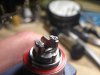
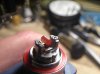
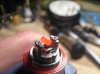
twisted lead parallels such as this one
30AWG TLP 6/5, 2.5mm i.d., 9mm L/L, t.m.c. = .5Ω
With some very fine power attributes at 30W (still running by the way, first build).
Dampmaskin's efforts with SE are def gratitude worthy. Suppressed my table building inclinations. The pity is SE won't
yet calc the res for the two distinct tensioned parallel types of dual or center post twisted leads. The res will be somewhat higher but typically within a couple'a 10ths.
I love twisted as add coverage does yield more flavor. But parallel t/l's combine the benefits of fast firing (more direct contact for the mass) of thin wire and the overall power handling of thick wire.
Advantage: Lotta fast-firing wire, small space, without having to resort to really thin straight wire or loopy winds.
Tension keeps it cool.
Good luck.
View attachment 412941View attachment 412942View attachment 412943